
No one is ever prepared to plan a funeral for a baby.
For many parents, their child is part of their lives as soon as they find out about the pregnancy, and sometimes even before that moment.
They start organising their lives around the little human that is on their way, and looking forward to sharing their lives with them. When the baby dies, all these dreams are scattered. The world that looked so much lighter and colourful turns into a black, dark, surreal reality.
Planning a funeral in the middle of heartbreak can feel overwhelming, if not impossible.
Yet, a ceremony can offer a space and a time to mourn your child to express grief, hold your child in love and honour their presence in your community of family and friends with beauty and deep love.
If you are looking for guidance on how to plan a baby funeral, here are seven gentle, meaningful ways to honour a life that has ended before it has barely begun, including examples from baby funerals I have helped create.
1. Include a Naming Ritual
A funeral for a baby is a ‘Hello’ and a ‘Farewell’ in one breath.
For many parents who are facing pregnancy or baby loss, it is important that their baby is acknowledged as their child.
Calling out your baby’s name and sharing the meaning behind it is a meaningful way to give them a presence and welcome them into your circle of family and friends.
It is also a reminder that your baby, their life, is unique and real, and that they will forever be known by the name(s) you have given to them.
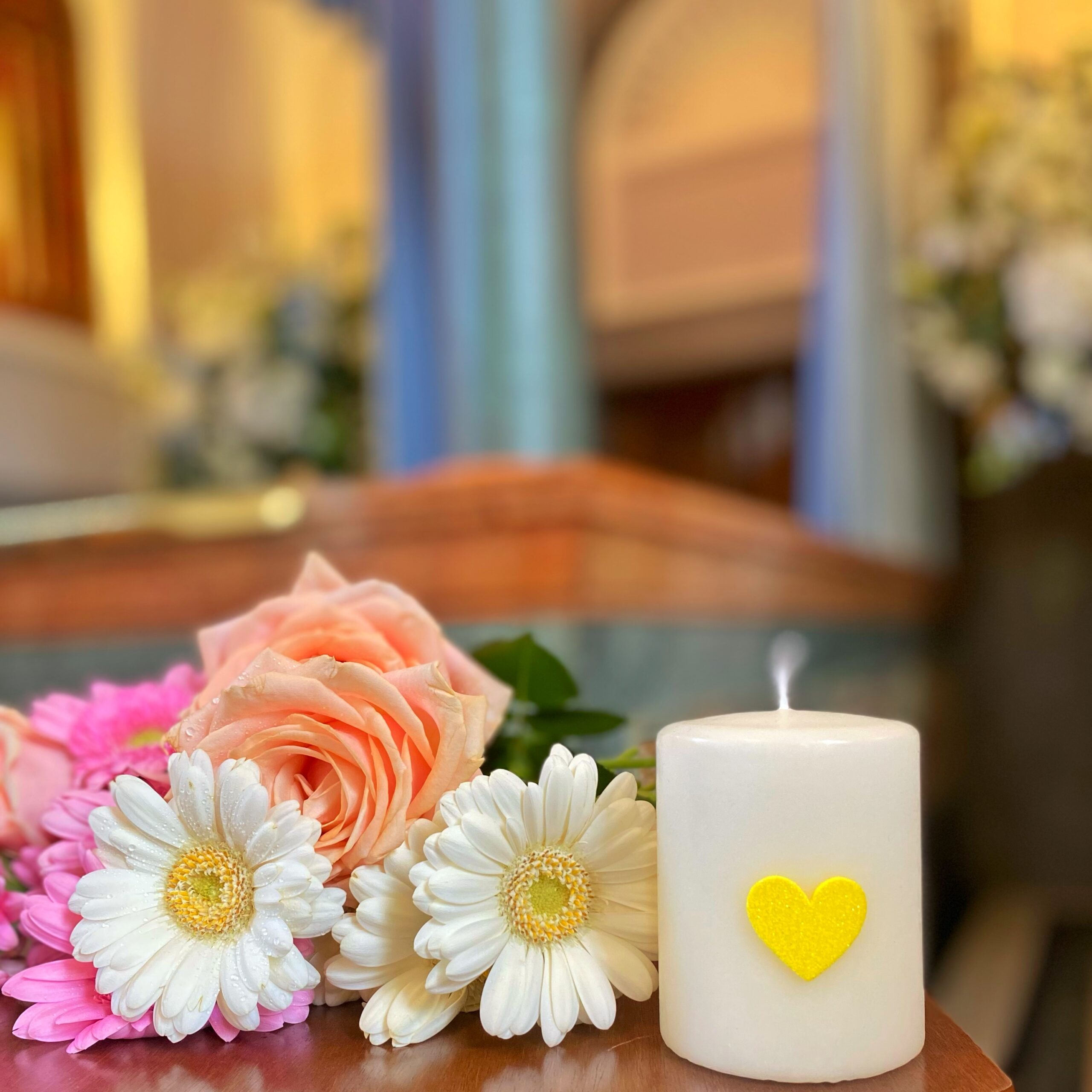
As part of the naming ritual you could light a candle for their life or place a flower or sprig of herb with them.
A naming ritual as part of the baby funeral ceremony helps welcoming the baby into the world and mark their continuous presence in the parents’ life for ever.
Some real examples:
- Toby’s parents called out their son’s name and explained why they had chosen this name
- Molly’s parents lit a candle for their daughter’s life
- At Lucia’s funeral her parents placed a rose with her name on top of her coffin, followed by a blessing
- For Isabella. everyone was invited to place a sage leaf with her, as a reference to her middle name ‘Sage’.
2. Share Your Baby’s Story
One mother said to me: “We only have scattered dreams, no memories. What can we possibly say during the service?”
Parents sometimes worry there aren’t enough memories to speak about. How can you talk about a life that ended before it has even begun?
The story may even begin before the pregnancy. Many parents build a relationship with their child before they are born. I’ve listened for hours to parents telling me about what it was like to be pregnant, their hopes and dreams for their baby, when and where they first felt the baby move, the special things they did during the pregnancy, the songs they sang, the stories they told to that special life that grew with every week of the pregnancy, what is what like to first meet them and, if the baby was born alive, all the precious moments they spent with them and what they looked like.
You can write a letter to your child and read this out (or ask someone else to do this), you can show photos, or tell their story using objects and toys related to their life.
At Evan’s funeral in a local wood, his parents had created a garland of photos so everyone could meet their smily, cheeky, beautiful little boy.
3. Include a Poem, Letter or Children’s Storybook
Poems and stories often give voice to the sentiments we carry in our hearts.
You can choose a poem or reading about the loss of a baby, or read something else that is meaningful to you. Maybe there’s a storybook you used to read to your little one during pregnancy or after birth.
- Rory’s parents chose to read from his favourite book about zebras.
- Sophie and Isabella’s parents wrote poems for their daughters.
- Vito’s mother read a letter to him in Italian, her mother tongue.
You can find suggestions for poems for baby funerals here.
4. Play Gentle or Meaningful Music
When words are hard to find, music can be a way to connect with thoughts and feelings.
Most parents choose gentle music for the funeral of their baby.
You may choose a song because it’s meaningful to you, or because its words feel fitting for the moment. Instrumental music, live or recorded, can create a calming and soothing atmosphere. You can also choose to include a children’s song you used to sing with them, or a lullaby you played or sang for them at bedtime.
When the baby funeral takes place outdoors, birdsong, the rustling of the leaves and other nature sounds offer a beautiful backdrop.
Sometimes, sharing a moment of silence is just the right thing to do.
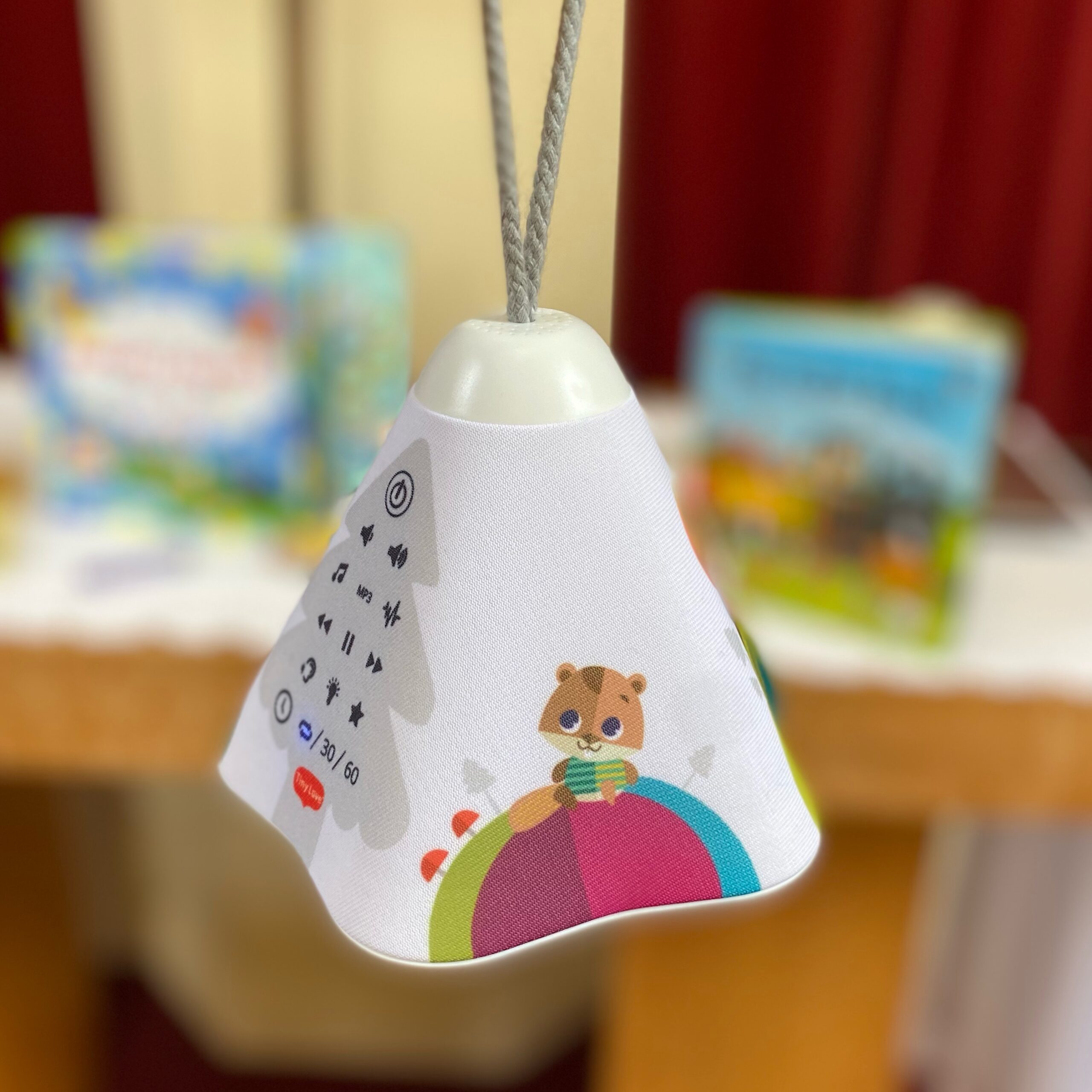
- At Lily’s funeral, her parents played music from the music box she listened to before going to sleep.
- At Wolfie’s funeral, his mother sang ‘The Parting Glass’ for him.
5. Incorporate Somatic Practices
Grief is an all body experience and somatic practices can help make us feel safe when grief feels too overwhelming.
Silence, a ritual or a physical movement helps connect to that what cannot be put into words. Examples are: lighting candles, blowing bubbles placing flowers or herbs with the baby or invite everyone to place a hand on their heart,
- At Maya’s funeral we stood in a circle around her little coffin, holding hands in silence.
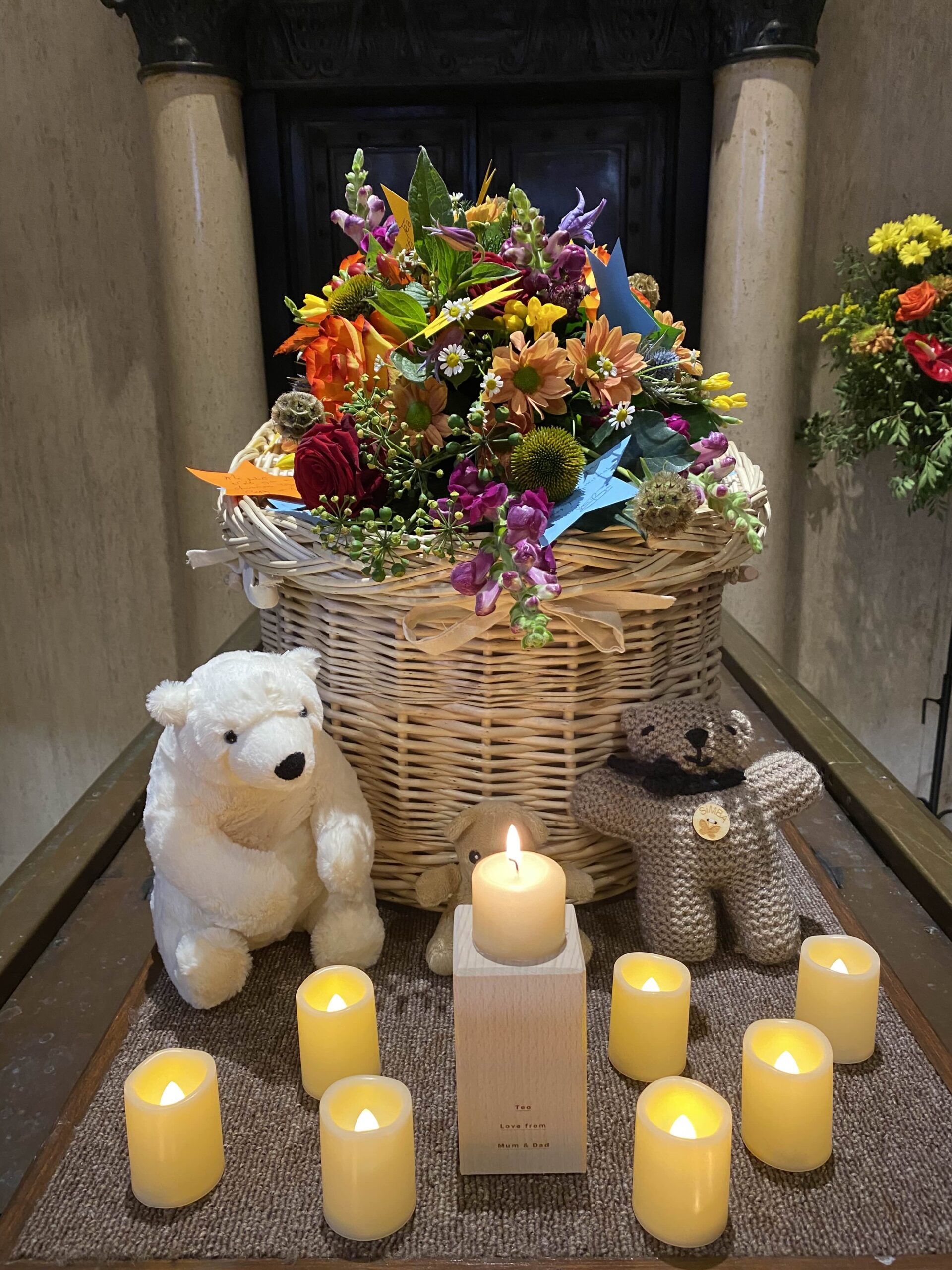
- At Freddie’s funeral everyone wrote a message for him on a paper star.
- For Theo, everyone lit a small candle which we placed around his coffin.
Learn more about somatic practices at funeral ceremonies here.
6. Personalise the Moment of Farewell
The moment of final farewell during a baby funeral is often the most difficult.
To bring gentleness to this transition, you can, for example, invite those who are present to lay a specific flower or herb on the little coffin, scatter feathers to a meaningful song or tuck them in with a special blanket.
You may wish to spend a private moment with your baby after everyone else has left.
- Sophie’s parents asked everyone to place a yellow flower with her – a symbol of the joy she brought to their lives.
- At Freddie’s funeral, everyone placed a feather on his coffin whilst we played the song ‘Angel In The Sky’
7. Involve Your Community in Ongoing Remembrance
“I find that people have simply been waiting for me to “recover”, and put pressure on me to “move on” and “put it behind me” as if Lucia wasn’t even a real person. Sadly, most people have never even said her name out loud. It’s so important to me that she continues to be acknowledged in any way possible.” (Heidi, Lucia’s mum)
For many parents it is important that their baby continues to be remembered.
If you are inviting family and friends to the funeral of your baby, inviting them to participate in the ceremony can offer support and a sense of belonging.
You could ask your family and friends to collectively call out your baby’s name, invite them to place symbolic items with your child, sing a song together, or simply form a quiet circle of support around you and your baby, whilst holding hands.
During the funeral, you can invite your community into ongoing remembrance rituals to continue the bond with your baby.
- Elton’s parents asked their family and friends to write their son’s name in the sand whenever they visited the beach and send a photo. A beautiful way to keep his memory alive.
- For Toby’s parents, snowdrops reminded them of their son. Everyone was invited to place a snowdrop with Toby and to think of him whenever they would see one in the future.
Alternative Locations for a Baby Funeral
You don’t have to have a baby funeral at a crematorium or burial chapel. You can have the ceremony anywhere: at home, in a garden, a children’s theatre, a community centre, a woodland, or natural burial site.
You also don’t have to use a traditional hearse. You can use your own car and when making your way to the funeral place you can hold the basket or coffin in your hands.
- Ethan’s funeral ceremony took place in a local woodland, where his parents enjoyed going during pregnancy, and where they took him for walks after he was born. This was organised without a funeral director. After the woodland ceremony, Ethan’s parents took him to the crematorium where they said their farewells privately.
- Olive’s funeral was at a natural burial ground. The ceremony was followed by a picnic underneath the tree where she was buried

Go Gently With Yourself
A funeral is an act of love – for your baby, and for yourself. You can express this in any way of form that feels right and meaningful to you, and at your pace.
You don’t have to use a crematorium or burial chapel, and you can opt out of any formalities that don’t feel right.
You can hold the ceremony anywhere: at home, in a forest, or at a venue that speaks to you. You can use your own car, and you can keep your baby close to you at all times.
Don’t try to get it perfect. Perhaps organising a funeral simply feels too overwhelming.
Go gently with yourself. You have a lifetime to honour your baby and express your love for them at your time, in your own way.
Helpful Links
Grieving the loss of your baby can be a lonely process.
There are many organisations out there who can help you with information or support. Here are some UK examples:
- SANDS – www.sands.org.uk
- Tommy’s – www.tommys.org
- Miscarriage Association UK – www.miscarriageuk.org
- The Lullaby Trust – www.lullabytrust.org.uk
Many parents also find support in community groups or on social media where other bereaved parents share their stories. Examples are:
Grief is personal, and everyone will grieve baby loss in their own way. Find the resources, websites, social media accounts and community groups that resonate most with you.